Our Communications Executive, Yasir Guerziz, reports from London’s Uncensored CMOs conference, discussing career arcs, LinkedIn criticism and creator partnership strategies…
Last month I was invited to ‘Uncensored CMO’ – a one-day event at London’s Outernet promising ‘6000 years of marketing wisdom in one day’. ‘The industry doesn’t need another polite conference’ we were told… and we therefore were treated to raw, honest takes from powerful industry leaders.
As someone just starting out on his industry journey, three takeaways stuck with me the most. Two were from Nils Leonard, Uncommon founder. The first revolved around his frustration with “LinkedIn warriors”: people who spend too much time commenting on whether work is good or bad instead of actually creating it. His view was that energy should be directed toward producing meaningful work, not critiquing from the sidelines.
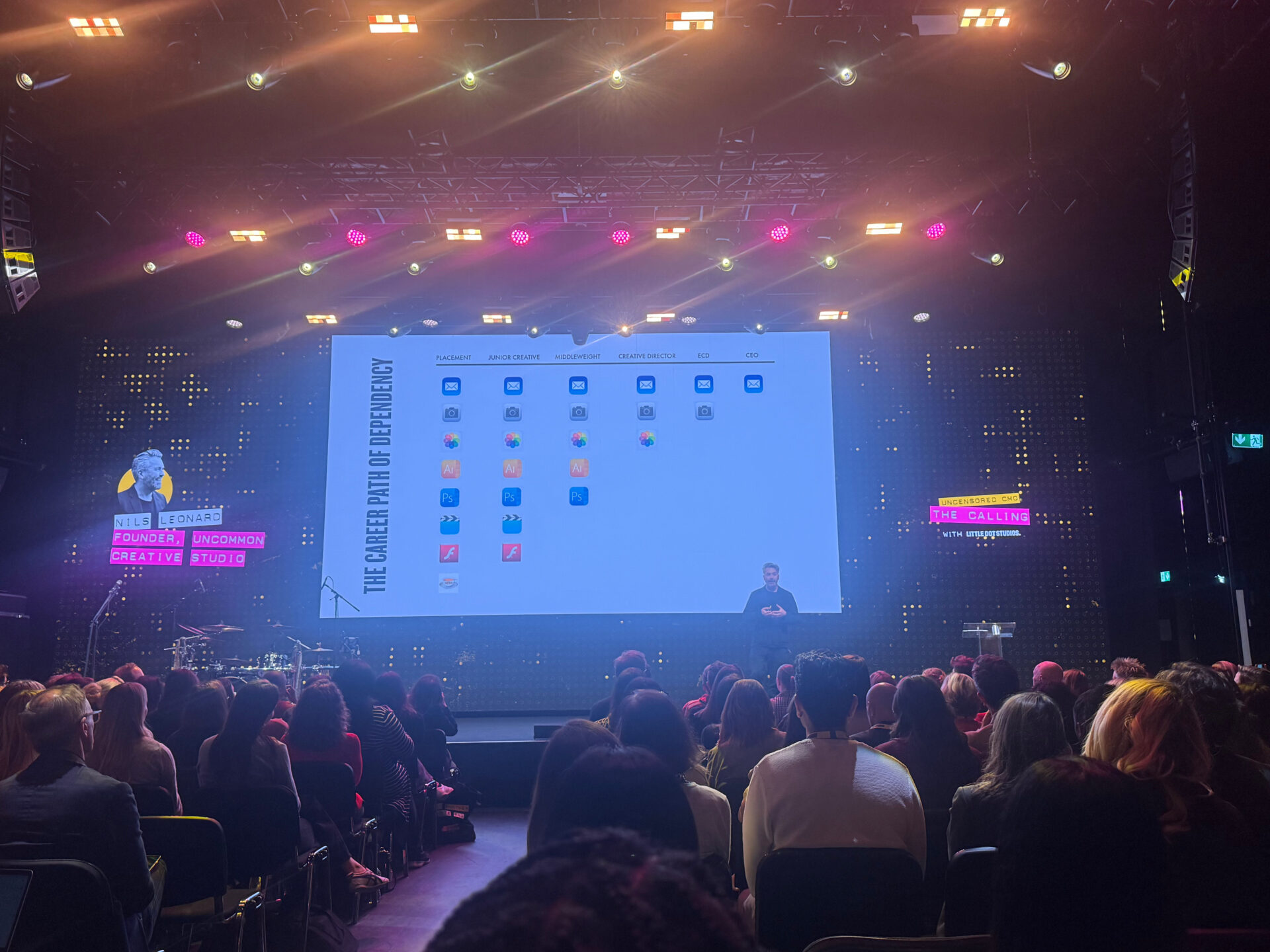
Nils’ second point came via a diagram he shared displaying his own career journey. He argued that the typical progression is the wrong way around. You start close to the work, you develop expertise, you earn seniority, and you gradually step away from the day-to-day. By the time you’re at CEO level, your relationship with the actual craft is often mediated almost entirely through email and reporting lines.
Nils wasn’t dismissing the value of leadership, but he was questioning whether this detachment is inevitable, or just something we’ve collectively agreed to accept. Leaders should actively keep sharpening their broader skill sets instead of stepping away from them.
Another interesting discussion from the day came a Lioness. England legend Fara Williams joined Alison Lomax, MD of YouTube UK & Ireland, to discuss who actually owns the audience – the creator, the company, or the platform?
The panel’s answer was diplomatic — ownership is shared between creator, brand, and platform. But I found myself disagreeing, at least in the context of football. I’d argue that ownership is heavily skewed toward the creator, as they are the primary connection point for the audience. I don’t think the company has much real stake in that relationship, at least not in the same direct way.
It’s a question that matters beyond sport. As brands increasingly build strategies around creator partnerships, they need to be thinking carefully about how they generate the most value from it, working with genuine experts that can be held to account.
Whilst that may not be 6,000 years of thinking in one event, it definitely felt important to consider. Whether you’re a brand, an agency leader or someone just starting out in the industry, your proximity to the work is more crucial than ever.