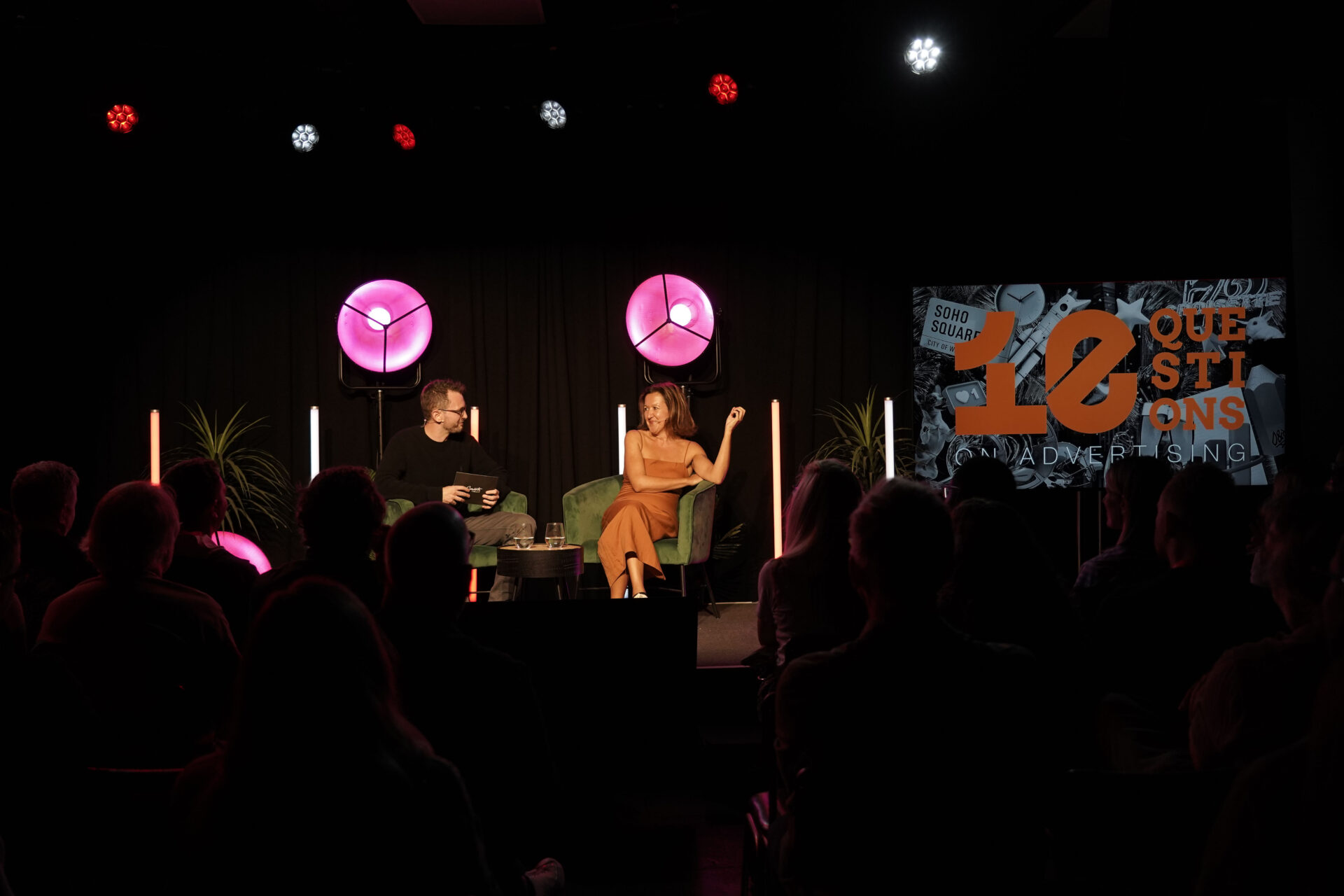
The annual Drum Live conference is quickly becoming a great temperature check for the industry – an excellent insight into the pressing issues at the top of marketers’ minds, and a chance to understand if and how agencies are responding.
Smarts were not only lucky enough to attend the event, but we were also on stage too, as our Group Marketing Director, Matt Williams, brought his popular 10 Questions on Advertising column to a live audience. Matt interviewed Larrisa Vince, the founder of Catbird Seat – so we asked him to share some of his learnings from the conversation – as well as some other themes to come out of the day…
Brand endurance FTW
Yes, there was a lot of chat on AI – it’s a 2026 marketing conference. But I was buoyed by the fact that the phrase I heard almost as much as ‘Artificial Intelligence’ was ‘long-term brand building’.
The marketers we heard from are laser-focused on building enduring brands, understanding the importance of long-term storytelling and developing more prolonged relationships with customers. Diageo’s Hazan Aydin Yesilova highlighted the responsibility of marketers to stay true to their brand, to keep consistency in check and not always be seduced by ‘the sexy new toy’. I loved her point that marketers get bored of their creative far quicker than consumers do – “when you think something has worn out, it probably hasn’t.”
Meanwhile Mars’ Global Brand VP for Pedigree and the Dog Portfolio, Chris Rodi, discussed the importance of taking everyone in the business on a journey so you can tell more enduring brand stories. He pointed out that big brand positioning moves need to be signed off by the President at Mars, because those ideas will need to hold true. Too often, he pointed out, brands are aware they’re being short-termist, but they don’t always have the numbers or proof to show that thinking long-term is more beneficial than chasing short-term results.
The Creator Economy is booming
Just as we at Smarts are constantly talking about the importance of building culturally enduring brands, we also yap on about the fast growth of our Creator Hub, so it was doubly pleasing to see the added emphasis on influencer marketing on The Drum Live agenda.
Some of the most interesting discussions revolved around the importance of briefing – how far you can or can’t push your creator relationships. “Brief, don’t script,” KraftHeinz’s Strategy Director, Will Cooke, explained. “If you wanted an actor, you would have commissioned an actor.” Will enthused about ‘the freedom of a tight brief’, which keeps the red thread running through content, but also allowed the creator to showcase the talents they were hired for.
Meanwhile Berghaus’ Adam Field took the audience behind-the-scenes of its community strategy, which, neatly tying together both this point and the last, is focused on building longer-term relationships with creators. He rallied against the ‘transactional’ relationships with creators that we’re seeing: “What I’m not in favour of is a brief piece of content where you create it, post it, invoice it and move on.”
Sometimes you have to ruffle a few feathers
Marketers and agencies are no strangers to having difficult conversations and, given some of the stats shared in some sessions about the current disconnect between client and agency intentions (that doesn’t apply to us at Smarts, of course), there may be a few more yet to come.
That said, my chat with Larissa proved that friction is sometimes the bearer of brilliance. She recalled an interaction with one senior agency leader, whilst she was Deputy Editor of Campaign, who was furious with her for running a story that made things particularly tricky for him. The pair had a full-blown argument whilst he was on the runway at Heathrow, and the friction continued throughout the rest of her time at Campaign.
But, when Larissa left the publication, this same agency leader was the first to ring her up and offer her a job. Because whilst he was unhappy with the story, he knew she was only doing her job – and doing it well at that.
It just goes to show that friction can be caused for many different reasons – and if you’re doing your job with integrity, it doesn’t always have to be a bad thing.
Read more from The Drum Live on The Drum here and watch Matt’s 10 Questions on Advertising session here.